
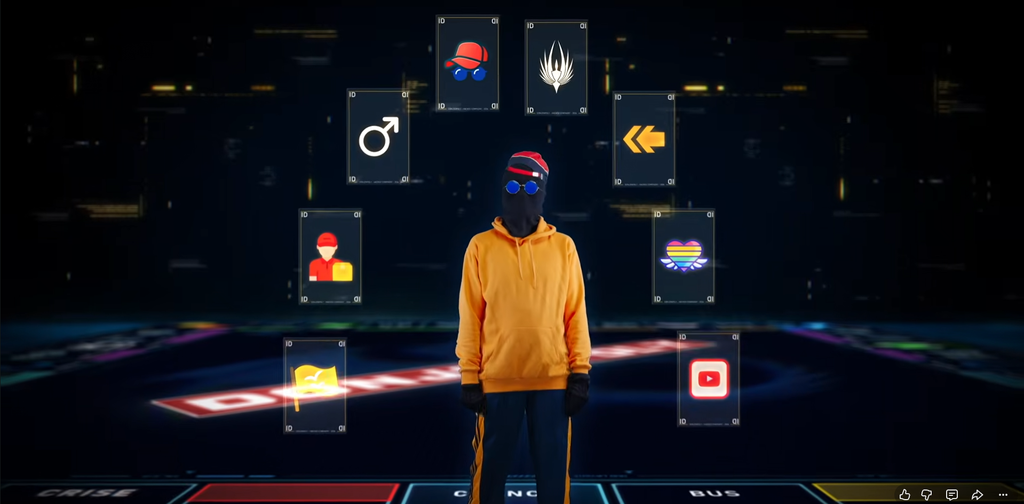
Et voici le pilote de HUB404 !
Vous pouvez rendre possible la suite sur ulule :
https://fr.ulule.com/hacking-social

Un mot sur la série HUB 404
Pensée pour accompagner la période électorale française de 2027 (et au-delà), HUB 404 est une série de vulgarisation scientifique engagée consacrée aux « bugs sociaux » : ces mécanismes psychologiques et sociaux qui nous influencent, nous divisent et nous enferment parfois dans l’impuissance.
Manipulation, domination, cyberharcèlement, polarisation, radicalisation, autoritarisme… Chaque épisode partira d’une question concrète pour amorcer une enquête, comprendre les mécanismes à l’œuvre et surtout découvrir des pistes d’action.

Pour explorer ces sujets, HUB 404 adopte une forme hybride, à la croisée de la vulgarisation scientifique, de la fiction et de l’expérimentation audiovisuelle. Entretiens, témoignages et séquences sensorielles s’entremêlent au sein d’un univers étrange : le HUB. Le tout selon une approche humaine et ouverte, tournée vers l’autodétermination, reconquête de notre puissance d’agir.

Le financement participatif de HUB404
Plutôt que de vous demander de financer une simple promesse, nous avons choisi de porter nous-mêmes le premier risque : nous avons autofinancé le pilote afin que vous puissiez le découvrir dès le lancement officielle de cette campagne. Ainsi, un immense merci aux tipeurs (tipeee, patreon, liberapay, paypal) sans qui ce pilote n’aurait jamais vu le jour !
Nous souhaitons que HUB 404 devienne une véritable série, composée de plusieurs épisodes explorant des thématiques que nous croyons importantes dans ce contexte électoral français 2027, alors que l’extrême droite n’a jamais été aussi proche du pouvoir ; la série étant résolument tournée vers l’autodétermination et la lutte contre l’autoritarisme.
Lorsque nous disons que nous avons autofinancé le pilote, cela signifie très concrètement que, si le premier palier de la campagne n’est pas atteint, le risque financier reposera sur nous deux (Chayka et Viciss). Les autres personnes ayant participé au projet seront quant à elles rémunérées quoi qu’il arrive selon leurs conditions.

Le premier palier permettra ainsi de couvrir une partie du financement du pilote, ce qui nous permettra de respirer, de rendre un tel pari soutenable et de donner à Hacking Social une base plus solide pour poursuivre l’aventure.
Chaque palier suivant financera la production d’un nouvel épisode jusqu’à permettre la réalisation d’une saison complète de six épisodes, voire d’une vidéo bonus, si nous atteignons des paliers élevés.
À mesure que de nouveaux paliers seront franchis, nous pourrons également mieux répartir la charge de travail en élargissant l’équipe avec davantage de moyens. Pour vous, cela signifie moins d’espacement entre la sortie des épisodes, mais aussi une série dont les ambitions techniques, artistiques et documentaires pourront grandir au fil de la campagne.
Chaque palier ne représente donc pas seulement un nouvel épisode : il permet à la série de gagner en ampleur, tout en construisant des conditions de production plus durables.
Avec ces ambitions, la production d’un épisode coûte 18 000€ en moyenne.
Notre objectif est ainsi de bâtir avec vous un modèle réellement indépendant et utile socialement : sans publicité, sans sponsoring, sans IA générative venant remplacer le travail d’artistes, avec des épisodes accessibles gratuitement, rigoureusement sourcés et relus par des scientifiques.
N’hésitez pas à consulter la page ulule, nous avons peut être répondu à d’autres questions que vous vous poseriez :

L’équipe

Réalisation & Direction artistique Chayka Hackso
Ecriture Chayka & Viciss Hackso
Relecture et intervention scientifique Kelly Duchemin
Production UME AGENCY – Marie Camier Théron
Co-production L’équipe video
Interviews et assistance à la réalisation Arnaud Constant & Nicolas Thomas
Pré-montage Nicolas Thomas
Avec la participation de Félicien Faury
Musique originale Scorch
Motion design Pakom
Motion design, VFX & sound-design Chayka Hackso
Miniatures Julien lacoue
Voix des témoignages
Extraits télévision

Poor Cinderella (Betty Boop) Dave Fleischer – Fleischer Studios – 1934
Meet King Joe – John Sutherland John Sutherland Productions / Harding College – 1949
Charlie et la Chocolaterie Tim Burton Warner Bros. Pictures / Village Roadshow Pictures – 2005
Chômage : quels sont les possibles effets pervers de l’offre raisonnable d’emploi ? BFMTV – YouTube – 19 mars 2018
À la recherche du bonheur – Gabriele Muccino Columbia Pictures / Overbrook Entertainment – 2006
Bibliographie

Amiot, C. E., Lizzio-Wilson, M., Thomas, E. F., & Louis, W. R. (2020). Bringing together humanistic and intergroup perspectives to build a model of internalisation of normative social harmdoing. European Journal of Social Psychology
Annes, A., & Redlin, M. (2012). Coming out and coming back: Rural gay migration and the city. Journal of Rural Studies
Appel, M. (2008). Fictional narratives, the belief in a just world, and forced-choice decisions. Media Psychology
Baumeister, R. F., & Leary, M. R. (1995). The need to belong: Desire for interpersonal attachments as a fundamental human motivation. Psychological Bulletin
Berger, P. L., & Luckmann, T. (1991). The social construction of reality. A treatise in the sociology of knowledge. Penguin Books.
Brown, N. D., Jacoby-Senghor, D. S., & Raymundo, I. (2022). If you rise, I fall: Equality is prevented by the misperception that it harms advantaged groups. Science Advances
Bullock, H. E., & Limbert, W. M. (2003). Scaling the socioeconomic ladder. Low-income women’sperceptions of class status and opportunity. Journal of Social Issues
Cambon, L., Yzerbyt, V. Y., & Yakimova, S. (2015). Compensation in intergroup relations: An investigation of its structural and strategic foundations. British Journal of Social Psychology
Caricati, L., & Sollami, A. (2018). Contrasting explanations for status-legitimacy effects based on system justification theory and social identity theory. Journal of Theoretical Social Psychology,
Caricati, L., & Sollami, A. (2018). Intergroup comparisons and intermediate-status groups.
Cohen-Chen, S., & Van Zomeren, M. (2018). Yes we can? Group efficacy beliefs predict collective action, but only when hope is high. Journal of Experimental Social Psychology,
Cozzarelli, C., Wilkinson, A. V., & Tagler, M. J. (2001). Attitudes toward the poor and attributions for poverty. Journal of Social Issues
Deci & Ryan (2017) : Ryan, R. M., & Deci, E. L. (2017). Self-determination theory. Basic psychological needs in motivation, development, and wellness. The Guilford Press
De La Boétie, É. (2014). Discours de la servitude volontaire [1576]. Paris: Vrin.
Ellemers, N., Spears, R., & Doosje, B. (1997). Sticking together or falling apart: In-group identification as a psychological determinant of group commitment versus individual mobility. Journal of Personality and Social Psychology
Faury, F. (2024). Des électeurs ordinaires : Enquête sur la normalisation de l’extrême droite. Éditions du Seuil.
Feather, N. T. (1974). Explanations of poverty in Australian and American samples: The person, society, or fate? Australian Journal of Psychology
Feagin, J. R., & Feagin, C. B. (1993). Relations raciales et ethniques. Englewood Cliffs, NJ : Prentice Hall.
Frasure-Yokley, L. (2018). Choosing the velvet glove: women voters, ambivalent sexism, and vote choice in 2016. Journal of Race, Ethnicity, and Politics
Furnham, A. (1982). Why are the poor always with us? Explanations for poverty in Great Britain. British Journal of Social Psychology
Gilens, M. (1999). Why Americans hate welfare: Race, media, and the politics of antipoverty policy. University of Chicago Press.
Girerd, L., Ray, F. A., Priolo, D., Codou, O., & Bonnot, V. (2020). “Free” Not to Engage: Neoliberal Ideology and Collective Action. The Case of the Yellow Vest Movement. International Review of Social Psychology
Godfrey, E. B., & Wolf, S. (2016). Developing critical consciousness or justifying the system? A qualitative analysis of how mothers in poverty explain the social system. Cultural Diversity and Ethnic Minority Psychology,
Grubbs, J. B., Warmke, B., Tosi, J., James, A. S., & Campbell, W. K. (2019). Moral grandstanding in public discourse: Status-seeking motives as a potential explanatory mechanism in predicting conflict. PLOS ONE
Heine, Proulx & Vohs (2006) : Heine, S. J., Proulx, T., & Vohs, K. D. (2006). Meaning maintenance model: On the coherence of human motivations. Personality and Social Psychology Review
Hennes, E. P., Nam, H. H., Stern, C., & Jost, J. T. (2012). Not all ideologies are created equal: Epistemic, existential, and relational needs predict system-justifying attitudes. Social Cognition
Hinkle, S., Taylor, L. A., Fox-Cardamone, L., & Ely, P. G. (1998). Social identity and aspects of social creativity. Shifting to new dimensions of intergroup comparison. In S. Worchel, J. F. Morales, D. Páez, & J.-C. Deschamps (Eds.), Social identity: International perspectives. SAGE
Huddy, L., Sears, D. O., Levy, J. S., & Jerit, J. (Eds.). (2023). The Oxford handbook of political psychology (3rd ed.). Oxford University Press
Hussak, L. J., & Cimpian, A. (2015). An early-emerging explanatory heuristic promotes support for the status quo. Journal of Personality and Social Psychology,
Iyengar, S. (1991). Is anyone responsible? How television frames political issues. University of Chicago Press.
Infop, sondage mars 2026 Le vote des LGBT à l’élection présidentielle de 2027
Jost, J. (2020). A theory of system justification. Harvard University Press.
Jost, J. T., & Thompson, E. P. (2000). Group-based dominance and opposition to equality as independent predictors of self-esteem, ethnocentrism, and social policy attitudes among African Americans and European Americans. Journal of Experimental Social Psychology
Jost, J. T., Glaser, J., Kruglanski, A. W., & Sulloway, F. J. (2003). Political conservatism as motivated social cognition. Psychological Bulletin
Jost, J. T., & Hunyady, O. (2002). The psychology of system justification and the palliative function of ideology.
Jost, J. T., & Kay, A. C. (2005). Exposure to benevolent sexism and complementary gender stereotypes: Consequences for specific and diffuse forms of system justification. Journal of Personality and Social Psychology
Jost, J. T., & Krochik, M. (2014). Ideological differences in epistemic motivation. In J. T. Jost, J. Sidanius, & B. Weingast (Eds.), Political psychology.
Jost, J. T., Stern, C., Rule, N. O., & Sterling, J. (2017). The politics of fear: Is there an ideological asymmetry in existential motivation? Social Cognition
Jost, J. T., Sterling, J., & Stern, C. (2017). Getting closure on conservatism, or the politics of epistemic and existential motivation. In C. Kopetz & A. Fishbach (Eds.), The motivation-cognition interface. New York: Routledge
Jost, J. T., Sapolsky, R., & Nam, H. H. (2018). Speculations on the evolutionary origins of system justification. Evolutionary Psychology
Jungkunz, S. (2026). The age of virtue signaling: Moral grandstanding as competitive display among young men. Political Psychology
Kay, A. C., & Friesen, J. (2011). On social stability and social change: Understanding when system justification does and does not occur. Current Directions in Psychological Science
Kay, A. C., Gaucher, D., Napier, J. L., Callan, M. J., & Laurin, K. (2008). God and the government: Testing a compensatory control mechanism for the support of external systems. Journal of Personality and Social Psychology
Kay, A. C., Gaucher, D., Peach, J. M., Laurin, K., Friesen, J., Zanna, M. P., & Spencer, S. J. (2009). Inequality, discrimination, and the power of the status quo: Direct evidence for a motivation to see the way things are as the way they should be. Journal of Personality and Social Psychology
Kay, A. C., & Jost, J. T. (2003). Complementary justice: Effects of “poor but happy” and “poor but honest” stereotype exemplars on system justification and implicit activation of the justice motive. Journal of Personality and Social Psychology
Kluegel, J. R., & Smith, E. R. (1986). Beliefs about inequality. Americans’ views of what is and what ought to be. New York: Aldine de Gruyter
Kraus, M. W., Piff, P. K., & Keltner, D. (2009). Social class, sense of control, and social explanation. Journal of Personality and Social Psychology
Kruglanski, A. W. (1989). Lay epistemics and human knowledge: Cognitive and motivational bases. Plenum Press.
Landau, M. J., Kay, A. C., & Whitson, J. A. (2015). Compensatory control and the appeal of a structured world. Psychological Bulletin
Lane, R. E. (2004). The fear of equality. In J. T. Jost & J. Sidanius (Eds.), Political psychology (pp. 217–229). New York: Psychology Press.
Leeder, G. F. (2024). Masculine, independent, and “not acting”: Hegemonic masculinity and femmephobia within an online community of queer men. Sociological Forum
Lerner, M. J. (1980). The belief in a just world: A fundamental delusion. Plenum Press.
Lima, B. P. B., de Souza, L. E. C., & Jost, J. T. (2025). System justification, subjective well-being, and mental health symptoms in members of disadvantaged minority groups. Clinical Psychology Review, 115
Meijs, M., Ratliff, K. A., & Lammers, J. (2019). Perceptions of feminist beliefs influence ratings of warmth and competence. Group Processes & Intergroup Relations
Mijs, J. J. B. (2021). The paradox of inequality: Income inequality and belief in meritocracy go hand in hand. Socio-Economic Review
Nielson, M. G., Romanello, B., & Martin-Storey, A. (2025). How privilege affects reactions to men’s femininity. Journal of Gender Studies
Owuamalam, C. K., Rubin, M., & Spears, R. (2016). The system justification conundrum: Re-examining the cognitive dissonance basis for system justification. Frontiers in Psychology, 7, 1889.
Owuamalam, C. K., Rubin, M., Spears, R., & Weerabangsa, M. M. (2019). Why do people from low-status groups support the system? A social identity perspective on system support. Current Directions in Psychological Science.
Owuamalam, C. K., Caricati, L., Rubin, M., Matos, A. S., & Spears, R. (2021). Why do women support socio-economic systems that disadvantage them? A registered test of system justification- and social identity-inspired hope explanations. European Journal of Social Psychology
Rubin, M., Owuamalam, C. K., Spears, R., & Caricati, L. (2023a): A social identity model of system attitudes (SIMSA): Multiple explanations of system justification by the disadvantaged that do not depend on a separate system justification motive. European Review of Social Psychology
Rubin, M., Owuamalam, C. K., Spears, R., & Caricati, L. (2023b). Social identity explanations of system justification: Misconceptions, criticisms, and clarifications. European Review of Social Psychology
Setzler, M., & Yanus, A. B. (2018). Why did women vote for Donald Trump?. PS: Political Science & Politics
Sidanius, J., & Pratto, F. (1999). Social dominance: An intergroup theory of social hierarchy and oppression. Cambridge, UK: Cambridge University Press
Silva, C., Pedrero, V., Barrientos, J., Manzi, J., & Reynaldos, K. (2024). Just-world beliefs, system justification, and their relationship with People’s health-related well-being: a narrative review. Behavioral Sciences
Skitka, L. J., & Tetlock, P. E. (1993). Providing public assistance: Cognitive and motivational processes underlying liberal and conservative policy preferences. Journal of Personality and Social Psychology
Smith, K. B., & Stone, L. H. (1989). Rags, riches, and bootstraps: Beliefs about the causes of wealth and poverty. The Sociological Quarterly
Spears, R., & Manstead, A. S. R. (1989). The social context of stereotyping and differentiation. european Journal of Social Psychology
Tajfel, H. (1978). Differentiation between social groups: Studies in the social psychology of intergroup relations.
Tajfel, H., & Turner, J. C. (1979). An integrative theory of intergroup conflict. In W. G. Austin & S. Worchel (Eds.), The social psychology of intergroup relations
Tajfel (1981) : Tajfel, H. (1981). Human groups and social categories: Studies in social psychology. Cambridge University Press
Tajfel, H., & Turner, J. C. (1986). The social identity theory of intergroup behavior. In S. Worchel & W. G. Austin (Eds.), Psychology of intergroup relations
Tien, C. (2017). The racial gap in voting among women: White women, racial resentment, and support for Trump. New Political Science
Tsoi, D. K. K. (2024). Sisters, bottoms, and “exotic combo”: Homonormative misogyny and respectable masculinity of middle-class gay sex workers in Hong Kong. Men and Masculinities
Turnbull-Dugarte, S. J., & Ortega, A. L. (2024). Instrumentally inclusive: The political psychology of homonationalism. American Political Science Review
Turner, J. C., Hogg, M. A., Oakes, P. J., Reicher, S. D., & Wetherell, M. S. (1987). Rediscovering the social group: A self-categorization theory. Basil Blackwell.
Uysal, M. S., Jurstakova, K., & Uluşahin, Y. (2022). An integrative social identity model of populist leadership. Social and Personality Psychology Compass
Van der Toorn, J., Feinberg, M., Jost, J. T., Kay, A. C., Tyler, T. R., Willer, R., & Wilmuth, C. (2015). A sense of powerlessness fosters system justification: Implications for the legitimation of authority, hierarchy, and government. Political Psychology,
Van Zomeren, M., Postmes, T., & Spears, R. (2008). Toward an integrative social identity model of collective action: A quantitative research synthesis of three socio-psychological perspectives. Psychological Bulletin
Van Zomeren, M., Spears, R., Fischer, A. H., & Leach, C. W. (2004). Put your money where your mouth is! Explaining collective action tendencies through group-based anger and group efficacy. Journal of Personality and Social Psychology
Wakslak, C. J., Jost, J. T., Tyler, T. R., & Chen, E. S. (2007). Moral outrage mediates the dampening effect of system justification on support for redistributive social policies. Psychological Science
Watts, R. J., Diemer, M. A., & Voight, A. M. (2011). Critical consciousness: Current status and future directions. New Directions for Child and Adolescent Development
Webster, D. M., & Kruglanski, A. W. (1994). Individual differences in need for cognitive closure. Journal of Personality and Social Psychology
Zucker, G. S., & Weiner, B. (1993). Conservatism and perceptions of poverty: An attributional analysis. Journal of Applied
Social Psychology
Musiques
Beneath the Surface – Synthetic Dusk – Brendon Moeller – 2026
The Clumsy Comedian – Ivan Arnold – 2023
The Static Universe – Akintu – Luke Hall – 2024
Put the Work In (Clean Version) – Colors – Daniel Whittemore et Mia Waring – 2020
Borderless – Milos Petrenj – 2020
Equator – Low Tree – Eyal Raz – 2020
Enigma – Outbreak – Charlie Ryan – 2020
Dark Apoko – Dark Apoko – Oran Alaloof – 2025
Subliminal Tension – Luca Tomassini – 2021
Going The Distance – Luca Tomassini – 2021
Low Orbit – Silver Age – Aviv Meshulam – 2020
Bellflower – Bellflower – Slowblink – 18 septembre 2026
DNA Evidence Alt No Percs – Crime & Science – Valerio Pellegri – 2018
When Skies Speak – ANOMALY – Ryan Taubert – 2014
Slasher From The 80s – High Speed EDM Volume 1 – Luca Tomassini – 2020
Mysterious Event Main – AFONE
Korobeiniki 8-Bit Version – Korobeiniki 8-Bit Version – arrangement Tomer Baruch – 2023
Windfall – Lux – Ryan Taubert – 24 avril 2020
Remerciements
Anne-Marie Chanceret
Loïc Jouan
Jérémie Kermarrec
L’équipe d’Ulule
L’équipe d’Ablaze
Madame Pizza <3

Les commentaires sont fermés.