
Bibliographie du dossier disponible ici :
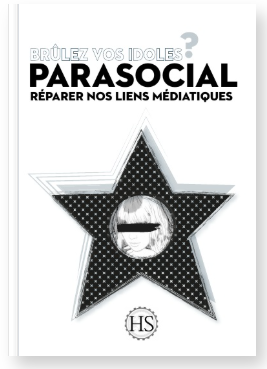
📖En livre papier : parasocial livre
🗏 Télécharger en PDF : parasocial pdf
💻Chapitres sur le site : ·[PS1] Brûlez vos idoles ? Parasocial, réparer nos liens médiatiques
·[PS2] Définir et mesurer le parasocial
·[PS3.1]Les effets de la relation parasociale
·[PS3.2]Diminuer les préjugés
·[PS3.3]Engager et politiser
·[PS4]La fin de la relation parasociale : deuil, rupture, trahison
·[PS5.1] Antifan : désaimer, détester, puis haïr activement une figure médiatique
·[PS5.2]Les antifans silencieux, compétitifs, autoritaires
·[PS6] Vers un parasocial autodéterminé et autodéterminateur ?
(ces titres se transformeront en hyperlien au fur et à mesure des publications)
🎥 Vous souhaitez voir ce sujet en vidéo ? Vous pouvez participer à notre crowdfunding ici : HUB 404 : la nouvelle série YouTube de Hacking Social – Ulule
Abrams, J. R., & Giles, H. (2009). Hispanic television activity: Is it related to vitality perceptions?
Abrams, J. R., McGaughey, K. J., & Haghighat, H. (2018). Attitudes toward Muslims: A test of the parasocial contact hypothesis and contact theory.
Adam, A., & Sizemore, B. (2013). Parasocial romance: A social exchange perspective.
Adams-Price, C., & Greene, A. L. (1990). Secondary attachments and adolescent self concept.
Alrababa’h, A., Marble, W., Mousa, S., & Siegel, A. A. (2021). Can exposure to celebrities reduce prejudice? The effect of Mohamed Salah on Islamophobic behaviors and attitudes. https://www.cambridge.org/core/services/aop-cambridge-core/content/view/A1DA34F9F5BCE905850AC8FBAC78BE58/S0003055421000423a.pdf/can-exposure-to-celebrities-reduce-prejudice-the-effect-of-mohamed-salah-on-islamophobic-behaviors-and-attitudes.pdf ★
Amiot Catherine E., Lizzio-Wilson Morgana, Thomas Emma F, Louis Winnifred R. (2019), Bringing together humanistic and intergroup perspectives to build a model of internalisation of normative social harmdoing. ⬟
Amiot, Sansfaçon, Louis (2013) , Investigating the motivations underlying harmful social behaviors and the motivational nature of social norms.
Amiot, Sansfaçon, Louis, (2013) Uncovering hockey fans’ motivations behind their derogatory behaviors and how these motives predict psychological well-being and quality of social identity.
Antoine Daniel. (2022). Je réagis à moi qui réagis à mon horrible conférence de 2014, YouTube.https://www.youtube.com/watch?v=rA6iZVzHqy8&t=53s
Aron, A., Aron, E. N., & Smollan, D. (1992). Inclusion of Other in the Self Scale and the structure of interpersonal closeness.
Aron, A., Aron, E. N., Tudor, M., & Nelson, G. (1991). Close relationships as including other in the self.
Ashe, D. D., Maltby, J., & McCutcheon, L. E. (2005). Are celebrity-worshippers more prone to narcissism?
Auter, P. J., & Palmgreen, P. (2000). Development and validation of a parasocial interaction measure : The audience- persona interaction scale.
Babeau O. (2023), La tyrannie du divertissement.
Bae, H.-S., Brown, W. J., & Kang, S. (2011). Social influence of a religious hero: The late Cardinal Stephen Kim Souh-wan’s effect on cornea donation and volunteerism.★
Barbara, A. M., & Dion, K. L. (2000). Breaking up is hard to do, especially for strongly “preoccupied” lovers.
Bartle, R. (1996). Hearts, clubs, diamonds, spades: Players who suit MUDs.
Beck, C. S., Aubuchon, S. M., McKenna, T. P., Ruhl, S., & Simmons, N. (2014). Blurring personal health and public priorities: An analysis of celebrity health narratives in the public sphere.
Bellefleur, M. (1981). Travail et loisir : du loisir antique au loisir contemporain
Bérail, P. de, Guillon, M., & Bungener, C. (2019). The relations between YouTube addiction, social anxiety and parasocial relationships with YouTubers: A moderated-mediation model based on a cognitive-behavioral framework.
Bernhold, Q. S. (2019). Parasocial relationships with disliked television characters, depressive symptoms, and loneliness among older adults.
Bhattacharjee, A., Berman, J. Z., & Reed, A., II. (2013). Tip of the hat, wag of the finger: How moral decoupling enables consumers to admire and admonish https://personapartnersltd.com/wp-content/uploads/2012/09/Bhattacharjee_Berman_Reed_JCR_Just-Accepted-Pring.pdf
Black, J. E., Helmy, Y., Robson, O., & Barnes, J. L. (2019). Who can resist a villain? Morality, Machiavellianism, imaginative resistance and liking for dark fictional characters. https://jessicaeblack.org/research/wp-content/uploads/2020/03/Black-Helmy-Robson-Barnes-2018.pdf
Bolchegeek (2026). Pourquoi personne ne comprend THE BOYS , YouTube. https://youtu.be/eHicftTXV-w?si=wpCBY52KY03XPaAo
Bond, B. J. (2018). Parasocial relationships with media personae: Why they matter and how they differ among heterosexual, lesbian, gay, and bisexual adolescents
Bond, B. J. (2021). The development and influence of parasocial relationships with television characters: A longitudinal experimental test of prejudice reduction through parasocial contact.★
Bond, B. J., & Calvert, S. L. (2014). A model and measure of U.S. parents’ perceptions of young children’s parasocial relationships.
Bond, B. J., & Compton, B. L. (2015). Gay on-screen: The relationship between exposure to gay characters on television and heterosexual audiences’ endorsement of gay equality. ★
Bourdieu, P. (1984).La distinction : une critique sociale du jugement
Boutboul, S., & Bredoux, L. (2022, 23 juin). Star de YouTube, Léo Grasset est mis en cause par plusieurs femmes. Mediapart
Boutboul, S., & Bredoux, L. (2022, 29 novembre). Le youtubeur Léo Grasset visé par une enquête préliminaire pour viol. Mediapart.
Bowlby, J. (1969). Attachment and loss: Vol. 1. Attachment
Bradley, B., & Jacobs, M. (2017, December 20). Surprise, surprise: The “alt-right” claims credit for “Last Jedi” backlash. HuffPost. Surprise, Surprise: The ‘Alt-Right’ Claims Credit For ‘Last Jedi’ Backlash | HuffPost Entertainment
Breves, P. (2020). Reducing outgroup bias through intergroup contact with non-playable video game characters in VR. ★
Brown, W. J. (2015). Examining four processes of audience involvement with media personae: Transportation, parasocial interaction, identification, and worship.
Brown, W. J., & Basil, M. D. (1995). Media celebrities and public health: Responses to “Magic” Johnson’s HIV disclosure and its impact on AIDS risk and high-risk behaviors
Buckels, E. E., Trapnell, P. D., & Paulhus, D. L. (2014). Trolls just want to have fun.
Casey, M. K., Allen, M., Emmers-Sommer, T., Sahlstein, E., Degooyer, D., Winters, A. M., Wagner, A. E., & Dun, T. (2003). When a celebrity contracts a disease: The example of Earvin “Magic” Johnson’s announcement that he was HIV positive.
Certeau (de), Michel (1980 / 1984).L’invention du quotidien
Chattoo, C. B., & Feldman, L. (2017). Storytelling for social change: Leveraging documentary and comedy for public engagement in global poverty. ★
Chung, S., & Cho, H. (2017). Fostering parasocial relationships with celebrities on social media: Implications for celebrity endorsement.
Cohen, J. (2003). Parasocial breakups: Measuring individual differences in responses to the dissolution of parasocial relationships.
Cohen, J. (2004). Parasocial break-up from favorite television characters: The role of attachment styles and relationship intensity.
Cohen, J., & Holbert, R. L. (2021). Assessing the predictive value of parasocial relationship intensity in a political context
Cole, T., & Leets, L. (1999). Attachment styles and intimate television viewing: Insecurely forming relationships in a parasocial way.
Collins, W. A., Welsh, D. P., & Furman, W. (2009). Adolescent romantic relationships.
Courrier international. (s.d.). Neil Gaiman, grand nom des comics et de la fantasy accusé de violences sexuelles.. https://www.courrierinternational.com/une/une-du-jour-neil-gaiman-grand-nom-des-comics-et-de-la-fantasy-accuse-de-violences-sexuelles_226583
Craig, S. L., & McInroy, L. B. (2014). You can form a part of yourself online: The influence of new media on identity development and coming out for LGBTQ youth. ⬟
Craig, S. L., McInroy, L. B., McCready, L. T., & Alaggia, R. (2015). Media: A catalyst for resilience in lesbian, gay, bisexual, transgender, and queer youth.
Cyrus North. (2021). Je ne suis pas ton ami. YouTube, https://youtu.be/EQaAyHhGc7Y
Daniel, E. S., Jr., & Westerman, D. K. (2017). Valar Morghulis (all parasocial men must die): Having nonfiction responses to a fictional character.
Darondeau, R. (2025, 19 mai). Même « Les Sims » n’échappent pas à la politique anti-diversité de Trump. Le HuffPost. https://www.huffingtonpost.fr/culture/article/meme-les-sims-n-echappent-pas-a-la-politique-anti-diversite-de-trump_250222.html
De Groot, T. M. M., Meurs, P., & Jacquet, W. (2022). Reducing albinism related stigma in Tanzania: An exploration of the impact of radio drama and radio interview.★
Deci et Ryan (2017), Self-determination Theory ★⬟
Derrick, J. L., Gabriel, S., & Hugenberg, K. (2009). Social surrogacy: How favored television programs provide the experience of belonging
Derrick, J. L., Gabriel, S., & Tippin, B. (2008). Parasocial relationships and self-discrepancies: Faux relationships have benefits for low self-esteem individuals.
Descours, J. RTL.(2025). “Je passe ma vie à révéler de jeunes talents, dont vous ne faites pas partie” : la réponse salée de Frédéric Beigbeder à Lena Situations.
Ditmer, M. A., Niemiec, R. M., Wittemyer, G., & Crooks, K. R. (2022). Socio-ecological drivers of public conservation voting: Restoring gray wolves to Colorado, USA.
Divertir pour dominer 1 (2010), éditions l’échappée.
Engle, Y., & Kasser, T. (2005). Why do adolescent girls idolize male celebrities?
Erickson, S. E., & Dal Cin, S. (2018). Romantic parasocial attachments and the development of romantic scripts, schemas and beliefs among adolescents
Erickson, S. E., Harrison, K., & Dal Cin, S. (2018). Toward a multi-dimensional model of adolescent romantic parasocial attachment
Finsterwalder, J., Yee, T., & Tombs, A. G. (2017). Would you forgive Kristen Stewart or Tiger Woods or maybe Lance Armstrong? Exploring consumers’ forgiveness of celebrities’ transgressions
France Bleu. (2023, 23 janvier). M&M’s renonce à ses personnages trop politisés selon la droite conservatrice américaine. France Bleu. https://www.francebleu.fr/infos/societe/m-m-s-renonce-a-ses-personnages-trop-politises-selon-la-droite-conservatrice-americaine-5334429
Gabriel, Paravati, Flomsbee (2018) From Apprentice to President: The Role of Parasocial Connection in the Election of Donald Trump https://www.researchgate.net/profile/Elaine-Paravati/publication/324032504_From_Apprentice_to_President_The_Role_of_Parasocial_Connection_in_the_Election_of_Donald_Trump/links/5c76b40d92851c6950464651/From-Apprentice-to-President-The-Role-of-Parasocial-Connection-in-the-Election-of-Donald-Trump.pdf
Gardner, W. L., Pickett, C. L., & Knowles, M. L. (2005). Social snacking and shielding: Using social symbols, selves, and surrogates in the service of belonging needs.
Gartua, J.-J., & Frutos, F. J. (2017). Enhancing attitudes toward stigmatized groups with movies: Mediating and moderating processes of narrative persuasion.★
Gates, R. (2018). Double Negative: The Black Image and Popular Culture.
Gibson, B., Hawkins, I., & Redker, C. (2018). Narcissism on the Jersey Shore: Exposure to narcissistic reality TV characters can increase narcissism levels in viewers.
Giles, D. C. (2002). Parasocial interaction: A review of the literature and a model for future research
Giles, D. C., & Maltby, J. (2004). The role of media figures in adolescent development: Relations between autonomy, attachment, and interest in celebrities.
Gilson, D. (2012). Politicians kissing babies: A short history.
GLAAD. (2021). Studio Responsibility Index 2021.
Gomillion, S. C., & Giuliano, T. A. (2011). The influence of media role models on gay, lesbian, and bisexual identity.
Gray (2021) Dislike-Minded: Media, Audiences, and the Dynamics of Taste ⬟★
Gray, J. (2003). New audiences, new textualities: Anti-fans and non-fans.
Green, M. C., & Brock, T. C. (2000). The role of transportation in the persuasiveness of public narratives. ⬟★
Greenwood, D. & Aldoukhov, A. (2023). The social context of PSRs.
Greenwood, D. N., Pietromonaco, P. R., & Long, C. R. (2008). Young women’s attachment style and interpersonal engagement with female TV stars
Hakim, M. A., & Liu, J. H. (2021). Development, construct validity, and measurement invariance of the parasocial relationship with political figures (PSR- P) scale
Hall, A. E. (2019). Identification and parasocial relationships with characters from Star Wars: The Force Awakens.
Hartmann, T., & Goldhoorn, C. (2011). Horton and Wohl revisited: Exploring viewers’ experience of parasocial interaction.
Hartmann, T., Stuke, D., & Daschmann, G. (2008). Positive parasocial relationships with drivers affect suspense in racing sport spectators.
HBO. (2021). Woodstock 99: Peace, Love, and Rage
Hoewe, J., & Sherrill, L. A. (2019). The influence of female lead characters in political TV shows: Links to political engagement. ⬟
Hoewe, J., Wiemer, E., Adekunle, T., Barton, R., Jett, J., & Pijanowski, A. (2020). Linking political TV shows with female lead characters to political engagement: The roles of parasocial processes and gender identity. ⬟
Hoffner, C. (2011). Parasocial and online social relationships.
Hoffner, C. A., & Bond, B. J. (2022). Parasocial relationships, social media, & well-being.
Hoffner, C. A., & Cohen, E. L. (2015). Portrayal of mental illness on the TV series Monk: Presumed influence and consequences of exposure.⬟
Hoffner, C. A., & Cohen, E. L. (2018). Mental health-related outcomes of Robin Williams’ death: The role of parasocial relations and media exposure in stigma, help-seeking, and outreach. ⬟
Hofstetter, C. R., & Gianos, C. L. (1997). Political talk radio: Actions speak louder than words.
Holbert, R. L. (2005). A typology for the study of entertainment television and politics.
Holbert, R. L., Pillion, O., Tschida, D. A., Armfield, G. G., Kinder, K., Cherry, K. L., & Daulton, A. R. (2003). The West Wing as endorsement of the American presidency: Expanding the domain of priming in political communication.
Holbert, R. L., Shah, D. V., & Kwak, N. (2003). Political implications of prime-time drama and sitcom use: Genres of representation and opinions concerning women’s rights.
Honeycutt, J. M. (2010). Imagined interactions.
Horton, D., & Richard Wohl, R. (1956). Mass Communication and Para-Social Interaction: Observations on Intimacy at a Distance.⬟
Houran, J., & Ashe, D. (2006). Extreme celebrity worship, fantasy proneness and dissociation.
Hu, M. (2016). The influence of a scandal on parasocial relationship, parasocial interaction, and parasocial breakup
Hu, Young, Liang et Guo (2018) An investigation into audiences’ reactions to transgressions by liked and disliked media figures
Iannone, N. E., McCarty, M. K., Branch, S. E., & Kelly, J. R. (2018). Connecting in the Twitterverse: Using Twitter to satisfy unmet belonging needs.
Igartua, J.-J., Wojcieszak, M., & Kim, N. (2019). How the interplay of imagined contact and first-person narratives improves attitudes toward stigmatized immigrants: A conditional process model.
Indee, (2021, 2 juin). Horizon Forbidden West : Pourquoi le visage d’Aloy interpelle autant ? Jeuxvideo.com. https://www.jeuxvideo.com/news/1415838/horizon-forbidden-west-pourquoi-le-visage-d-aloy-interpelle-autant.htm
Jacobs, A. M. (2015). Neurocognitive poetics: Methods and models for investigating the neuronal and cognitive-affective bases of literature reception.
Jagayat, A., & Choma, B. L. (2021). Cyber-aggression towards women: Measurement and psychological predictors in gaming communities
Jain, P., Pandey, U. S., & Roy, E. (2017). Perceived efficacy and intentions regarding seeking mental healthcare: Impact of Deepika Padukone, a Bollywood celebrity’s public announcement of struggle with depression
Jenkins (1992) Textual Poachers ⬟★
Johnson, Derek. (2007). Fantagonism: Factions, institutions, and constitutive hegemonies of fandom.
Joyce, N., & Harwood, J. (2014). Improving intergroup attitudes through televised vicarious intergroup contact: Social cognitive processing of ingroup and outgroup information.
Joyce, N., Harwood, J., & Springer, S. (2020). The sweet spot: Curvilinear effects of media exemplar stereotypicality on perceptions of older adults.★
Kaufman (2009) The Psychology of Creative Writing ⬟
Kaufman, G. F., & Libby, L. K. (2012). Changing beliefs and behavior through experience-taking★
Keaton, S. A., Gearhart, C. C., & Honeycutt, J. M. (2014). Associations between imagined interactions and the Big Five personality traits
Kim, C., & Harwood, J. (2020). Parasocial contact’s effects on relations between minority groups in a multiracial context.★
Kosenko, K. A., Binder, A. R., & Hurley, R. J. (2016). Celebrity influence and identification: A test of the Angelina effect
La Boétie (1576), Discours de la servitude volontaire ★
La Zone des Guigeekeries, (2026) Table ronde : pourquoi on aime David Lynch ? Youtube https://youtu.be/IUZia0SdVqs?si=kibpSPVBRT3qqM-f
Lee, E.-J., & Shin, S. Y. (2012). Are they talking to me? Cognitive and affective effects of interactivity in politicians’ Twitter communication.
Lee, J. S., & Kwak, D. H. (2016). Consumers’ responses to public figures’ transgression: Moral reasoning strategies and implications for endorsed brands
Levy, M. R. (1979). Watching TV news as para-social interaction.
Library of a Viking. (2025.). Quand ton auteur préféré est un monstre, YouTube https://youtu.be/Dshg249w1uo
Liebers, N., & Schramm, H. (2019). Parasocial interactions and relationships with media characters: An inventory of 60 years of research.
Lissitsa, S., & Kushnirovich, N. (2020). Coevolution between parasocial interaction in digital media and social contact with LGBT people.
Lookadoo, K. L., & Wong, N. C. H. (2020). Searching for a silver lining: Mediated intergroup contact and mental health perceptions.
Lotun, S., Lamarche, V. M., Samothrakis, S., Sandstrom, G. M., & Matran-Fernandez, A. (2022). Parasocial relationships on YouTube reduce prejudice towards mental health issues★
Lowe, D. I. (2024). I need to see me on TV: Parasocial affirmations of sexual and gender identity development of LGBTQ+ mass media consumers
Madison, T. P., & Porter, L. V. (2015). The people we meet: Discriminating functions of parasocial interactions.
Madison, T. P., & Porter, L. V. (2016). Cognitive and imagery attributes of parasocial relationships.
Madžarević, G., & Soto-Sanfiel, M. T. (2018). Positive representation of gay people for reducing homophobia★
Malo, J. (2025, November 27). “Je méprise votre narcissisme” : Frédéric Beigbeder relance sa guéguerre avec Lena Situations.
Maltby, J., Day, L., McCutcheon, L. E., Houran, J., & Ashe, D. D. (2006). Extreme celebrity worship, fantasy proneness and dissociation: Developing the measurement and understanding of celebrity worship within a clinical personality context
Mar, R. A., & Oatley, K. (2008). The function of fiction is the abstraction and simulation of social experience
Martin, A. L., Jr. (2019). Why all the hate? Four Black women’s anti-fandom and Tyler Perry.
Massey, Z. B., Wong, N. C. H., & Barbati, J. L. (2021). Meeting the (trans)parent: Test of parasocial contact with transgender characters on reducing stigma toward transgender people.★
McCarthy, C. J., Lambert, R. G., & Brack, G. (1997). Structural model of coping, appraisals, and emotions after relationship breakup.
McCulloch, Richard. (2019). A game of moans: Fantipathy and criticism in football fandom.
McCullough, K. M., Wong, Y. J., & Deng, K. (2021). Exploring the connections between watching Asian American YouTubers, racial identity, and self-esteem
McCutcheon, L. E., Lange, R., & Houran, J. (2002). Conceptualization and measurement of celebrity worship.
McDermott, D. T., Brooks, A. S., Rohleder, P., Blair, K., Hoskin, R. A., & McDonagh, L. K. (2018). Ameliorating transnegativity: assessing the immediate and extended efficacy of a pedagogic prejudice reduction intervention.★
McInroy, L. B., & Craig, S. L. (2015). Transgender representation in offline and online media: LGBTQ youth perspectives
McInroy, L. B., & Craig, S. L. (2017). Perspectives of LGBTQ emerging adults on the depiction and impact of LGBTQ media representation.
McInroy, L. B., & Craig, S. L. (2020). “It’s like a safe haven fantasy world”: Online fandom communities and the identity development activities of sexual and gender minority youth.
McInroy, L. B., Craig, S. L., & Leung, V. W. Y. (2019). Platforms and patterns for practice: LGBTQ+ youths’ use of information and communication technologies
McLaughlin, B., & Rodriguez, N. S. (2017). Identifying with a stereotype: The divergent effects of exposure to homosexual television characters.
Mediapart. (2022). Star de YouTube, Léo Grasset est mis en cause par plusieurs femmes. https://www.mediapart.fr/journal/france/230622/star-de-youtube-leo-grasset-est-mis-en-cause-par-plusieurs-femmes
Meyrowitz, J. (1994). The life and death of media friends: New genres of intimacy and mourning.
Mikolajczak, M. (dir.). (2014). Les compétences émotionnelles. ⬟
Miles, E., & Crisp, R. J. (2014). A meta-analytic test of the imagined contact hypothesis.
Miller, P. R., Flores, A. R., Haider-Markel, D. P., Lewis, D. C., Tadlock, B., & Taylor, J. K. (2020). The politics of being “Cait”: Caitlyn Jenner, transphobia, and parasocial contact effects on transgender-related political attitudes.
Moe, P. W. (2012). Revealing rather than concealing disability: The rhetoric of Parkinson’s advocate Michael J. Fox.
Moyer-Gusé, E., Dale, K. R., & Ortiz, M. (2019). Reducing prejudice through narratives: An examination of the mechanisms of vicarious intergroup contact.
Murphy, S. T., Frank, L. B., Moran, M. B., & Patnoe-Woodley, P. (2011). Involved, transported, or emotional? Exploring the determinants of change in knowledge, attitudes, and behavior in entertainment-education.
Murrar, S., & Brauer, M. (2018). Entertainment-education effectively reduces prejudice.
Murumaa-Mengel, M., & Siibak, A. (2020). From fans to followers to anti-fans: Young online audiences of microcelebrities.
Myrick, J. G., & Erlichman, S. (2020). How audience involvement and social norms foster vulnerability to celebrity-based dietary misinformation.
Myrick, J. G., & Willoughby, J. F. (2021). The “celebrity canary in the coal mine for the coronavirus”: An examination of a theoretical model of celebrity illness disclosure effects.
Native Media Theory. (2022, December 28). Indigenous issues with AVATAR | RANT [Video]. YouTube. https://youtu.be/lMwKQmrNsKg?si=y9xSTTyoeKWUnBEI ⬟
Nisbett, G. S., & Schartel Dunn, S. (2021). Reputation matters: Parasocial attachment, narrative engagement, and the 2018 Taylor Swift political endorsement.
Nylund, D. (2007). Reading Harry Potter: Popular culture, queer theory and the fashioning of youth identity.
Oliver, M. B., Bilandzic, H., Cohen, J., Ferchaud, A., Shade, D. D., Bailey, E. J., & Yang, C. (2019). A penchant for the immoral: Implications of parasocial interaction, perceived complicity, and identification on liking of anti-heroes.
Opinion | J’ai un problème de caractère – The New York Times
Paravati, E., Gabriel, S., Valenti, J., Valent, K., & Buffone, A. (2024). Social comparison, parasocial relationships, and attachment style: How and when do celebrities improve self-liking?
Paravati, E., Naidu, E., Gabriel, S., & Wiedemann, C. (2020). More than just a tweet: The unconscious impact of forming parasocial relationships through social media https://ubwp.buffalo.edu/gabriellab/wp-content/uploads/sites/65/2025/04/Paravati-E.-Gabriel-S.-Naidu-E-Wiedemann-C.-2020.-More-Than-Just-a-Tweet.pdf
Pascal, Fragment Divertissement n° 4 / 7 – Papier original : RO 139, 210, 209, 217-2 et 133 Copies manuscrites du XVIIe s. : C1 : Divertissement n° 186 p. 53 à 57 v° / C2 : p. 76 à 81 Éditions de Port-Royal : Chap. XXVI – Misère de l’homme : 1669 et janv. 1670 p. 203-217 / 1678 n° 1 à 3 p. 198-211 Éditions savantes : Faugère II, 31, II / Havet IV.2 / Michaut 335 / Brunschvicg 139 / Tourneur p. 205-3 / Le Guern 126 / Lafuma 136 / Sellier 168 https://www.penseesdepascal.fr/Divertissement/Divertissement4-moderne.php
Pettigrew, T. F. (2009). Secondary transfer effect of contact: Do intergroup contact effects spread to noncontacted outgroups?
PsykoCouac. (2023). C’est quoi l’estime de soi ? – Psykonnaissance #37.1 YouTube. https://www.youtube.com/watch?v=UTytHX0bSpc ⬟
PsykoCouac. (2023). Ça fait quoi de croire en soi ? – Psykonnaissance #37.2 [Vidéo]. YouTube https://youtu.be/oFrrJ8UJQmk?si=rTgf6lwJuGJ16-hi ⬟
PsykoCouac. (2023). Remonter son estime de soi – Psykonnaissance #37.3 [Vidéo]. YouTube. https://www.youtube.com/watch?v=WLAKG2ccilU ⬟
Quinn Zoe (2017), Crash Override ★
Rain, M., & Mar, R. A. (2021). Adult attachment and engagement with fictional characters.
Rasmussen, E. E., & Ewoldsen, D. R. (2016). Treatment via television: The relation between watching Dr. Phil and viewers’ intentions to seek mental health treatment.★
Real stories, I’m Shot! The True Crime Story Of John Lennon’s Murderhttps://www.youtube.com/watch?v=Ou0umF09Uq0
Richards, M. N., & Calvert, S. L. (2016). Parent versus child report of young children’s parasocial relationships in the United States.
Riles, J. M., & Adams, K. (2021). Me, myself, and my mediated ties: Parasocial experiences as an ego-driven process.
Ropert, P. (2025, 22 mars). « Assassin’s Creed Shadows » : “C’est une bataille culturelle qui dépasse le simple cadre du jeu vidéo”. France Culture. https://www.radiofrance.fr/franceculture/podcasts/l-info-culturelle-reportages-enquetes-analyses/assassin-s-creed-shadows-c-est-une-bataille-culturelle-qui-depasse-le-simple-cadre-du-jeu-video-2750191
RTBF. (n.d.). Picasso : derrière le génie, un homme cruel et violent. RTBF Actus. Picasso : derrière le génie, un homme cruel et violent – RTBF Actus
RTL Belgique. (2026, 26 mars). Il se frotte à moi… Karine accuse Patrick Bruel d’agression… https://www.rtl.be/actu/belgique/justice/il-se-frotte-moi-me-caresse-karine-la-belge-qui-accuse-patrick-bruel-dagression/2026-03-26/article/783874
Rubin, A. M., & Perse, E. M. (1987). Audience activity and soap opera involvement: A uses and effects investigation.
Rubin, A. M., & Step, M. M. (2000). Impact of motivation, attraction, and parasocial interaction on talk radio listening
Rubin, A. M., Perse, E. M., & Powell, R. A. (1985). Loneliness, parasocial interaction, and local television news viewing
Samuel-Azran, T., & Yarchi, M. (2020). Normalization on the politicians’ messages level, equalization on the citizens’ discussions level: The 2015 Israeli elections campaign on Facebook.
Sanderson, J., & Cheong, P. H. (2010). Tweeting prayers and communicating grief over Michael Jackson online.
Schemer, C., & Meltzer, C. E. (2020). The impact of negative parasocial and vicarious contact with refugees in the media on attitudes toward refugees.
Schiappa, E., Gregg, P. B., & Hewes, D. E. (2005). The parasocial contact hypothesis.
Shulman, S., & Seiffge-Krenke, I. (2001). Adolescent romance: Between experience and relationships
Siem, B., Neumeyer, L., & Rohmann, A. (2021). Entertainment education as a means to reduce anti-Muslim prejudice: For whom does it work best? An extended replication of Murrar and Brauer (2018).★
Silver, N., & Slater, M. D. (2019). A safe space for self-expansion: Attachment and motivation predict engagement and transportation into the narrative world.
Simpson, G. (2025). Comment les youtubeurs vous retournent le cerveau (sociologie des relations parasociales), YouTube https://www.youtube.com/watch?v=1OUyUiM54Kk
Slater, M. D., Ewoldsen, D. R., & Woods, K. W. (2018). Extending conceptualization and measurement of narrative engagement after-the-fact: Parasocial relationship and retrospective imaginative involvement.
So, J., & Nabi, R. L. (2013). Reduction of perceived social distance as an explanation for media’s influence on personal risk perceptions: A test of the risk convergence model.
So, J., & Shen, L. (2016). Personalization of risk through convergence of self- and character-risk: Narrative effects on social distance and self-character risk perception gap.
Sorek, T., & Ceobanu, A. M. (2022). Benjamin Netanyahu as a mobilizing symbol in ethno-class divisions among Jewish Israelis
Theran, S. A., Newberg, E. M., & Gleason, T. R. (2010). Adolescent girls’ parasocial interactions with media figures.
Thiellement, P. (2026, March 8). Lost, la série qui peut changer votre vie Blast, le souffle de l’info. https://youtu.be/ZPvrUlF46YY ⬟
Tian, Y., & Yoo, J. H. (2015). Connecting with the biggest loser: An extended model of parasocial interaction and identification in health-related reality TV shows.
Tsay, M., & Bodine, B. M. (2012). Exploring parasocial interaction in college students as a mul-tidimensional construct: Do personality, interpersonal need, and television motive predict their relationships with media characters?
Tsfati, Y., Cohen, J., Dvir-Gvirsman, S., Tsuriel, K., Waismel-Manor, I., & Holbert, R. L. (2021). Political para-social relationship as a predictor of voting preferences in the Israeli 2019 Elections.
Tukachinsky Forster, R. (2021). Parasocial romantic relationships: Falling in love with media figures
Tukachinsky Forster, Rebecca (2023) (ed.), The Oxford Handbook of Parasocial Experiences ⬟
Tukachinsky, R. (2020). Playing a bad character but endorsing a good cause: Actor-character fundamental attribution error and persuasion.
Tukachinsky, R. H. (2010). Para-romantic love and para-friendships: Development and assessment of a multiple-parasocial relationships scale.
Tukachinsky, R., & Dorros, S. M. (2018). Parasocial romantic relationships, romantic beliefs, and relationship outcomes in USA adolescents: Rehearsing love or setting oneself up to fail?
Tukachinsky, R., Brogan-Freitas, E., & Urbanovich, T. (2019). Promoting support for public health policies through mediated contact: Can narrator perspective and self-disclosure curb in-group favoritism?★
Tukachinsky, R., Walter, N., & Saucier, C. J. (2020). Antecedents and effects of parasocial relationships: A meta-analysis
Twenge, J. M., Catanese, K. R., & Baumeister, R. F. (2002). Social exclusion causes self-defeating behavior.
Upton, B. (2015). The aesthetic of play.
Upton, B. (2017). Situational game design.
Vezzali, L., Stathi, S., & Giovannini, D. (2012). Indirect contact through book reading: Improving adolescents’ attitudes and behavioral intentions toward immigrants.★
Vezzali, L., Stathi, S., Giovannini, D., Capozza, D., & Trifiletti, E. (2015). The greatest magic of Harry Potter: Reducing prejudice.★
Visintin, E. P., Voci, A., Pagotto, L., & Hewstone, M. (2017). Direct, extended, and mass-mediated contact with immigrants in Italy: Their associations with emotions, prejudice, and humanity perceptions.
Vulture. (s.d.). Neil Gaiman allegations controversy Amanda Palmer Sandman Madoc. https://www.vulture.com/article/neil-gaiman-allegations-controversy-amanda-palmer-sandman-madoc.html
Ward, L. M. (2004). Wading through the stereotypes: Positive and negative associations between media use and Black adolescents’ conceptions of self.
Wen, N., & Cui, D. (2014). Effects of celebrity involvement on young people’s political and civic engagement
Wilson, C. (2007). Celine Dion’s Let’s talk about love: A journey to the end of taste.
Wilson, C. (2014). Let’s talk about love: Why other people have such bad taste.
Wong, N. C. H., Lookadoo, K. L., & Nisbett, G. S. (2017). “I’m Demi and I have bipolar disorder”: Effect of parasocial contact on reducing stigma toward people with bipolar disorder.★
Woznicki, N., Arriaga, A. S., Caporale-Berkowitz, N. A., & Parent, M. C. (2021). Parasocial relationships and depression among LGBQ emerging adults living with their parents during COVID-19: The potential for online support.
Wu, Y., Mou, Y., Wang, Y., & Atkin, D. (2018). Exploring the de-stigmatizing effect of social media on homosexuality in China: An interpersonal-mediated contact versus parasocial-mediated contact perspective★
Young, A. F., Gabriel, S., & Hollar, J. L. (2013). Batman to the rescue! The protective effects of parasocial relationships with muscular superheroes on men’s body image.
Young, A. F., Gabriel, S., & Sechrist, G. B. (2012). The skinny on celebrities: Parasocial relationships moderate the effects of thin media figures on women’s body image.
Zajonc, R. B. (1968). Attitudinal effects of mere exposure.
Zhang, L., & Haller, B. (2021). Parasocial contact effects and a disabled actor in Speechless★.
20Minutes. (2022, 10 septembre). Non, Amazon n’a pas trahi Tolkien en intégrant des personnes de couleur au casting des « Anneaux de pouvoir ». 20 Minutes. https://www.20minutes.fr/arts-stars/culture/3348099-20220910-non-amazon-trahi-tolkien-integrant-personnes-couleur-casting-anneaux-pouvoir
Credits graphiques

Les vignettes illustratives des vidéos sont citées dans la bibliographie générale précédente.
Nos schémas, illustrations de cartes ont été conçus en partie avec les éléments, icônes provenant de thenounproject.com (CC BY 3.0) avec une prédominance de l’artiste Gan Khoon Lay.
Nous avons pu aussi utiliser les glyphes des polices d’écriture comme Segoe Symbol.
Le fond cartographié des cartes provient de la carte de Mitteldorf du jeu Legends of Valour.
Les autres artistes dont nous avons utilisé les icônes sont (j’ai préservé les majuscules/minuscules tels que les artistes l’ont laissé) :
Adrien Coquet,
ainul muttaqin,
Aneeque Ahmed,
Angelica,
Anggara Putra,
Ar2ar,
Arif Hariyanto,
Ariyanto Deni,
Arya Icons,
BEARicons,
Bondan siswanto,
Dierys Design,
Dong Gyu Yang,
Elena Babushkina,
Eskak,
Eucalyp,
Fathur Rachman,
Foxyard Studio,
Frebers,
Graphtend,
Gregor Cresnar,
hanis tusiyani,
Hayashi Fumihiro,
HideMaru,
I Putu Dicky Adi Pranatha,
Iconesia,
Ishaq_hmad,
Izwar Muis,
Jagat Kreasi,
Larea,
Lewen Design,
Llisole,
Luis Prado,
Mia Elysia,
MUHAMAD KHOTIBUL UMAM,
Muhammad Riza,
Mujib,
myriam huré,
Nicolas Vicent,
Nithinan Tatah,
Nuricon,
pojok_icon,
popcornart,
ProSymbols,
pxLens,
Rudez Studio,
SBTS,
Studio Danro,
Vectors Market